 Like
Like Follow
Hidden recession
When US President Barack Obama praised the prime minister last Friday, telling David Cameron that the economic recovery proves he’s “doing something right”, neither of the leaders stopped to consider who’s benefiting from this supposed recovery.
New research released on Monday (January 19) found that two out of five families in the UK—an astounding 8.1m parents and children—are living below what is considered a socially acceptable standard of living.
To put this figure into the context of the so-called recovery, the number of parents and children living below a basic standard of living has jumped by almost a third since the recession, which in 2008, stood at a much lower 5.9m.
The Joseph Rowntree Foundation report notes that those at highest risk of living below the Minimum Income Standard (MIS) are young people and single parents.
Unlike other measures of poverty, the MIS defines an adequate income level needed to participate in society, based on what the public thinks is needed to achieve an acceptable minimum standard of living. The MIS includes basic necessities, such as food, heat, transport and housing.
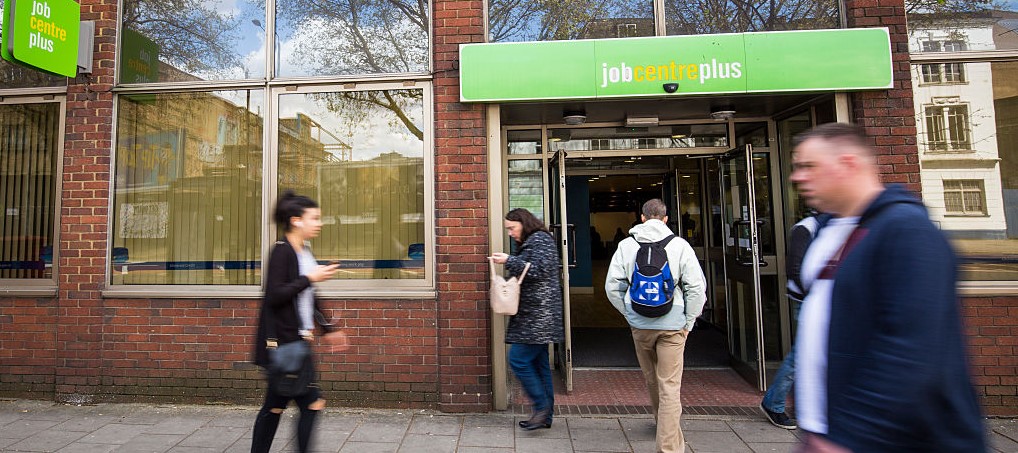
While you might assume that those living below the MIS are jobless, the report found a new trend in the most recent year of data reviewed – the risk of falling below the MIS was not as closely linked to employment status.
Especially for certain groups, such as couples with children, the substantial increase in those falling below the minimum standard was almost entirely attributed to inadequate wages and changes to benefits.
The new research gives another angle to Cameron and the Tories’ employment narrative, in which rising numbers of people in work means by proxy an economic recovery.
As shadow chancellor Ed Balls noted in a comment piece last week, since 2010, when the Tory-led coalition government came to power, working people are, on average, ÂŁ1600 worse off per year, even amidst the growth in the number of jobs.
And even job growth itself is far from even-handed, with another report released Monday revealing that the north of England is falling alarmingly behind—for every 12 jobs created in the South, one job is lost in the North.
Balls points to years of failed economic policies, saying, “Left to their own devices, unfettered markets and trickle-down economics are leading to increasing levels of inequality, stagnating wages and a hollowing out of decent, middle income jobs.”
“David Cameron and George Osborne are completely out of touch when they try to tell people in Britain that the economy is fixed,” he added.
Unite assistant general secretary Steve Turner agrees.
“Cameron’s latest campaign pledge to pursue â€full employment’ is opportunistic to say the least and misses a number of important realities of work in Tory Britain – firstly, while we would all support a commitment to full employment this is not to mask an economy in which millions of people are being funnelled into low-wage, short or zero hour, insecure jobs,” Turner said.
“What kind of economic recovery is it when families across the country, many with two parents working full-time, cannot earn enough to avoid growing debts and cover basic necessities like food, energy, rent or transport?
“If the recovery is to be felt by all, then job creation itself is not enough,” Turner argued.
“We must force corporations to pay decent wages by instituting an immediate hike to the minimum wage and using public procurement to establish a negotiated wage alongside highly skilled, safe and secure unionised jobs. Government has a role to plan in both promoting and supporting a strong and effective system of sector level collective bargaining and a floor of employment rights which ban amongst other things exploitative work arrangements, such as zero-hour contracts.”